Your system, as it actually runs
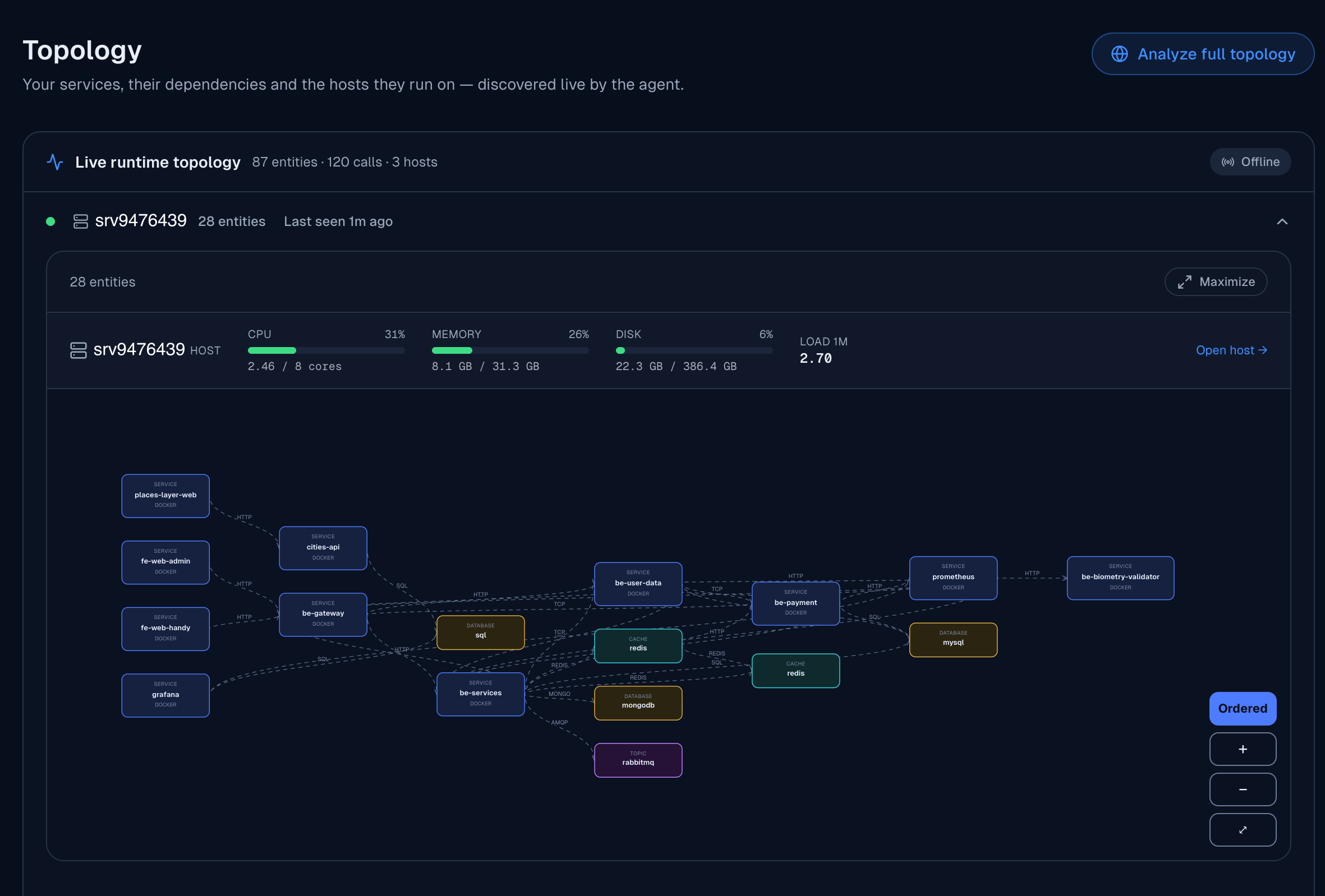
An always-on, read-only agent discovers your services, their dependencies and the host they run on — correlated with the static code graph: static, runtime, or both. Docker deployments are supported today; Kubernetes and systemd-managed services are on the roadmap.
How runtime topology works
Read-only agent
A lightweight agent runs on your infrastructure and only observes — it reads process, container and dependency information, never writing or executing.
Service discovery
Services, the hosts they run on and how they connect are discovered automatically and drawn as a live topology.
One host, one view — never mixed
On a paid plan, run the agent on multiple servers. Each host gets its own topology section — two servers running the same service are never merged into one confusing graph.
Dependency edges
Real call dependencies between services appear as edges, so you see how traffic actually flows, not how a diagram claims it should.
Code ↔ runtime correlation
The runtime graph is aligned with the static code graph, so you can view a component as code, as it runs, or both at once.
Docker today, more coming
Discovery reads the Docker socket and /proc today. Kubernetes (DaemonSet) and systemd-managed services are next on the roadmap.
Always current
Because the agent streams continuously, the topology reflects the system as it is right now.
See it live
Real topology from a live Archynt deployment